把任意材料变成试卷
Material into exam
粘贴一段材料,自动切分知识点,生成单选、判断、填空和简答。
Paste material, get topics, multiple-choice, true/false, cloze and short-answer questions.
上传自己的学习材料,自动出题并用 Jev(决策模型)逐得分点判分的自助备考系统。
把自己的学习材料变成一套可以自动判分、并且能解释为什么得这个分的考试。
备考的瓶颈通常不是「没有资料」,而是「不知道自己哪里没掌握」。读完一份材料,感觉都懂了;真正被问到时,才发现有些要点根本没说出来。而通用题库和你的材料往往对不上:题目是别人出的,考点是别人的重点。
The bottleneck in exam prep is rarely the material. It is not knowing which parts you actually failed to learn. After reading, everything feels understood; when questioned, some points turn out to be missing. Generic question banks do not fix this either, because the questions and the key points belong to someone else.
这个项目的目标很具体:把你自己的材料变成一场考试,并且让每一分都能追溯到「哪一个要点没说到」。
The goal is narrow: turn your own material into an exam where every point traces back to a specific idea you did or did not express.
材料是单向输入的。没有问答环节,就很难知道要点是否真的记住了。
Material is one-way input. Without a questioning step, there is no evidence that a point was actually learned.
简答题只给一个总分,看不出是漏了定义、漏了条件,还是把结论说反了。
A single score for a written answer hides whether a definition, a condition or the conclusion itself was missing.
题库考的是别人的重点,答案也无法回到你手上这份材料的原文。
Question banks test someone else's priorities, and their answers cannot be traced back to your source document.
没有错题本和掌握度,复习只能从头再来一遍。
Without a mistake log or mastery signal, revision restarts from zero every time.
粘贴一段材料,自动切分知识点,生成单选、判断、填空和简答。
Paste material, get topics, multiple-choice, true/false, cloze and short-answer questions.
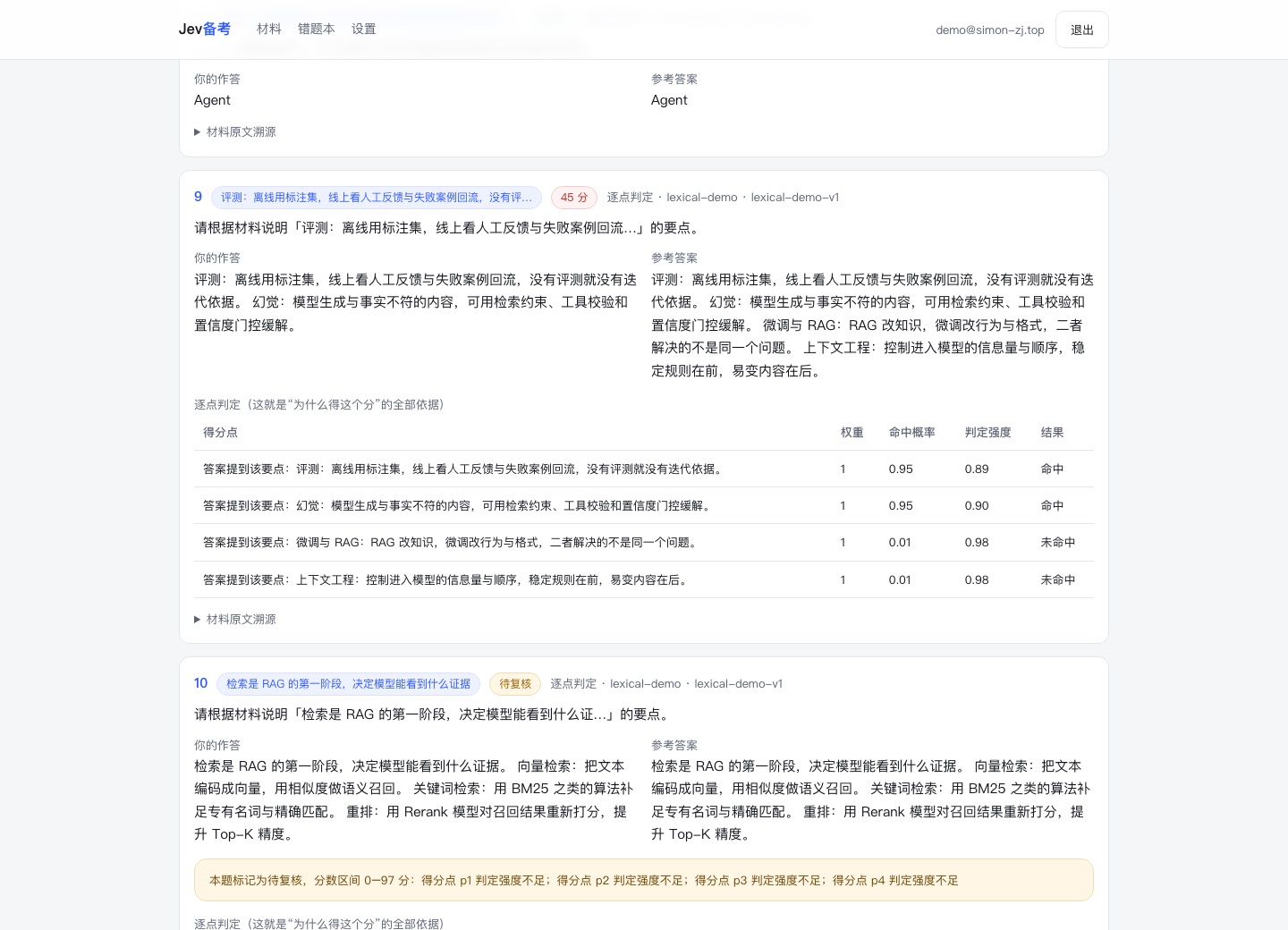
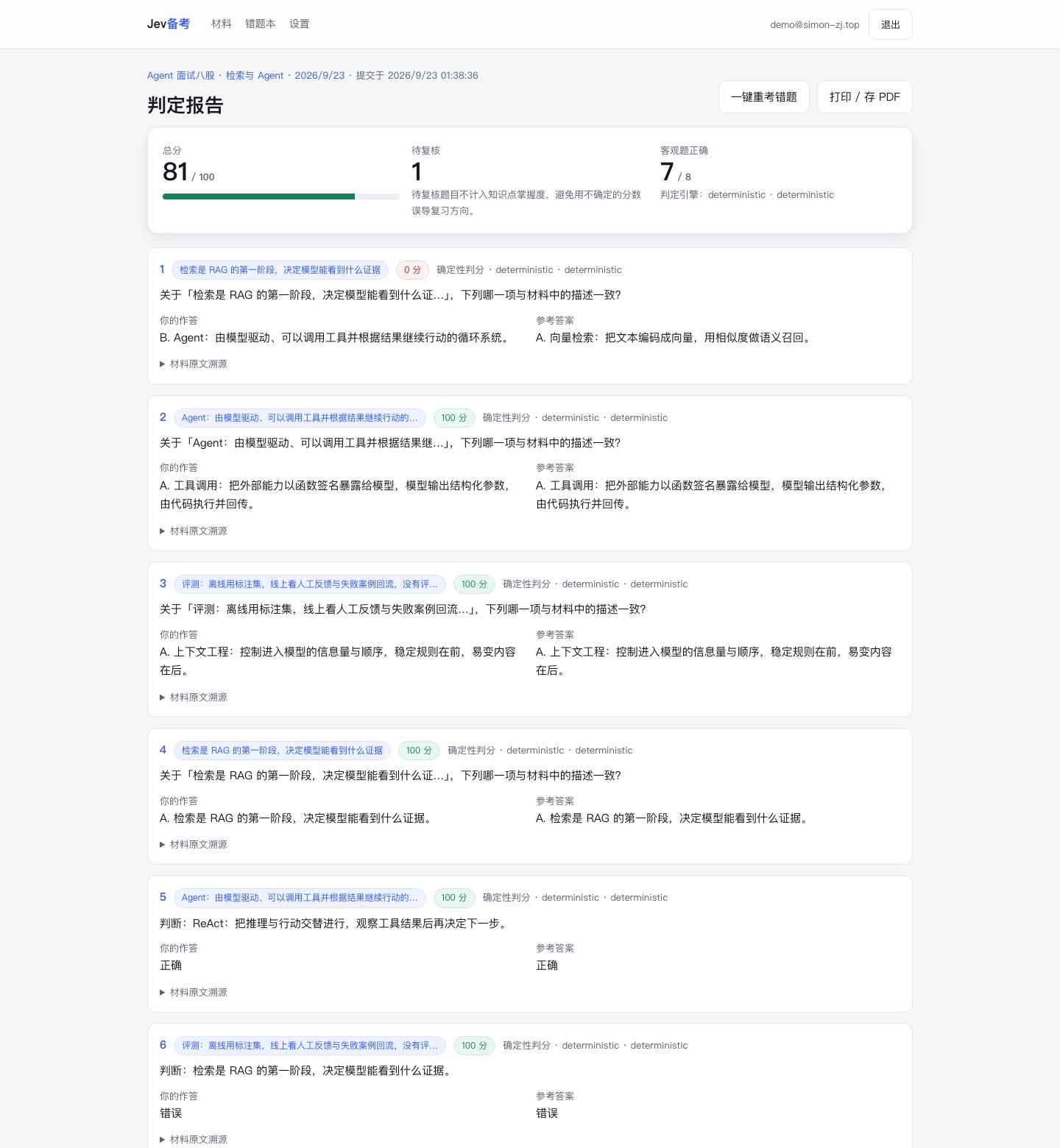
简答题不是给一个 0–100 的黑盒分数,而是逐条判定「这个要点说到了没有」。
A written answer is graded point by point instead of receiving one opaque 0-100 score.
模型没把握的题目标记为「待复核」,给出分数区间,并且不计入掌握度。
Low-confidence judgments are flagged with a score range and excluded from mastery tracking.
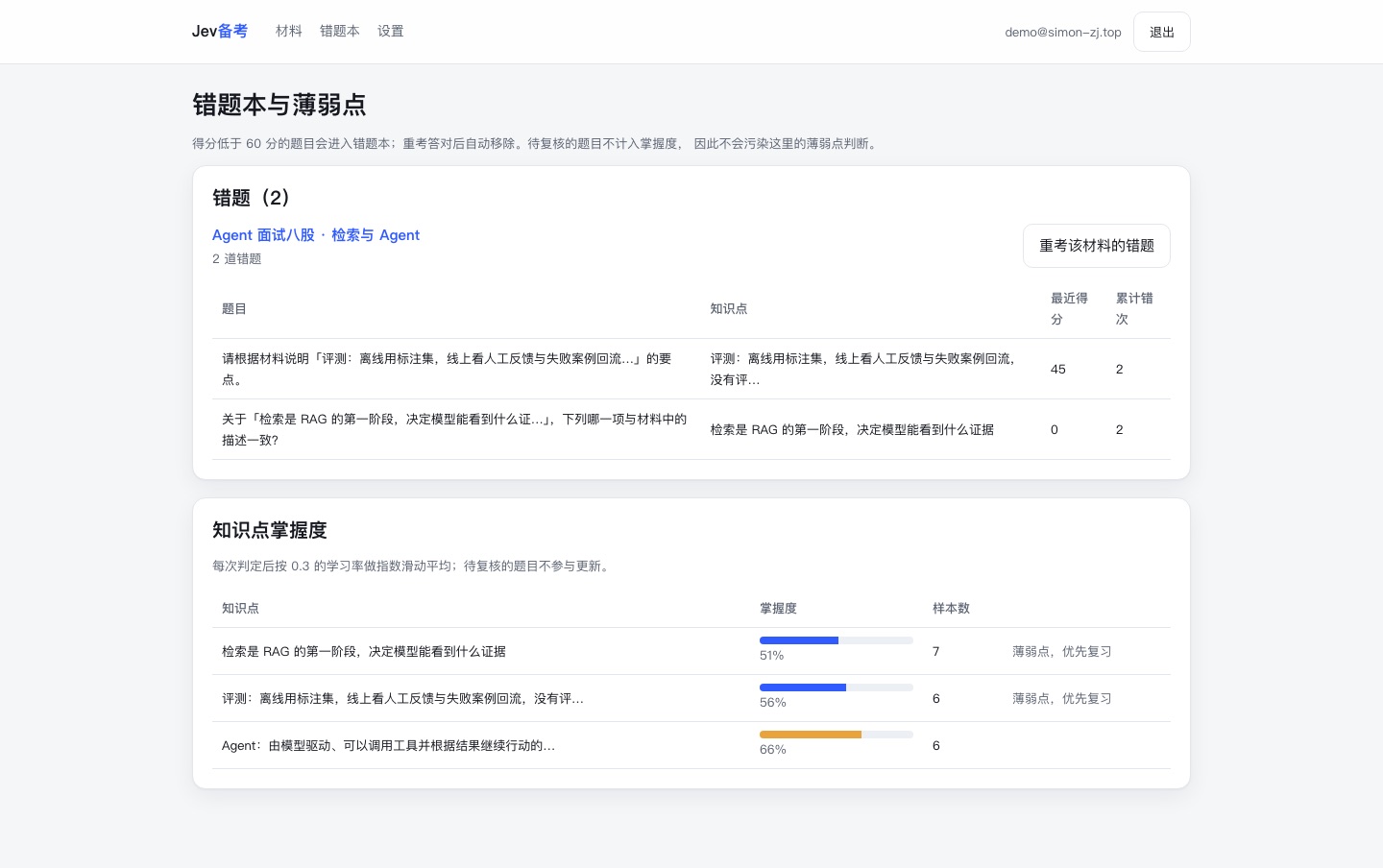
自动收集错题,按知识点聚合掌握度,并支持一键重考错题。
Mistakes are collected, mastery is aggregated per topic, and retakes reuse the same questions.
这里有一个容易混淆的地方:Jev 不是「打分模型」,而是一类输出决策的模型(System One / Decision Model)。它接收材料与问题,输出的是类型化概率:命题为真的概率、选项的概率分布、有序 rubric 上的分数,而不输出任何文字。所以整条链路上有三种明确的角色分工。
One distinction matters: Jev is not a scoring model but a decision model (System One). It takes material and questions, and returns typed probabilities: how likely a statement is true, a distribution over options, a score on an ordered rubric. It never returns prose. That splits the pipeline into three explicit roles.
项目自带一个判定评测脚本和一份小规模金标准集(12 道主观题、42 个得分点,逐点人工标注)。它输出逐点准确率、Brier 分数、校准分桶与自一致性,并设了门槛:逐点准确率不低于 90%,且校准分桶单调。
The project ships an evaluation harness with a small golden set (12 written questions, 42 labelled rubric points). It reports per-point accuracy, Brier score, calibration buckets and self-consistency, with a gate of at least 90% accuracy and monotonic calibration.
有意思的是,把「离线演示引擎」放进去跑,它只有 42.9% 的逐点准确率、Brier 0.56,而且置信度全部挤在 0.99 那一档。这正是要接入 Jev 的理由:词面重合不能替代校准过的判定模型,而这件事必须有数字,不能靠感觉。
Run the offline demo engine through it and it scores 42.9% per-point accuracy with a Brier score of 0.56, with all confidence crammed into one bucket. That number is the argument for using a calibrated decision model instead of word overlap, and it is why the gate is a number rather than an opinion.
| 适合 | Good fit | 不适合 | Poor fit |
|---|---|---|---|
| 有明确要点的背诵型材料(面试八股、法条、术语、流程) | Memorisation-heavy material with explicit points | 需要执行或符号验证的题(复杂计算、代码正确性) | Tasks needing execution or symbolic checking |
| 要点式简答:判断「说到了没有」 | Point-based written answers | 创新写作、开放论述的“好坏”评价 | Judging the quality of open-ended writing |
| 量大、需要成本的批量判定 | High-volume, cost-sensitive grading | 需要模型给出解释理由的场景(Jev 只给概率) | Scenarios demanding a written justification |
目前是自己部署使用的形态:克隆仓库、装依赖、填两个密钥(Jev 判定 + 出题模型),本地跑起来即可。没有密钥也能运行,只是会退化成离线演示模式,界面上会明确标注。
Today it is a self-hosted tool: clone the repository, install dependencies, provide two keys (a Jev grading key and a question-generation model), and run it locally. It also runs without any key, degrading to a clearly labelled offline demo mode.
npm install && npm run dev
npm install && npm run dev
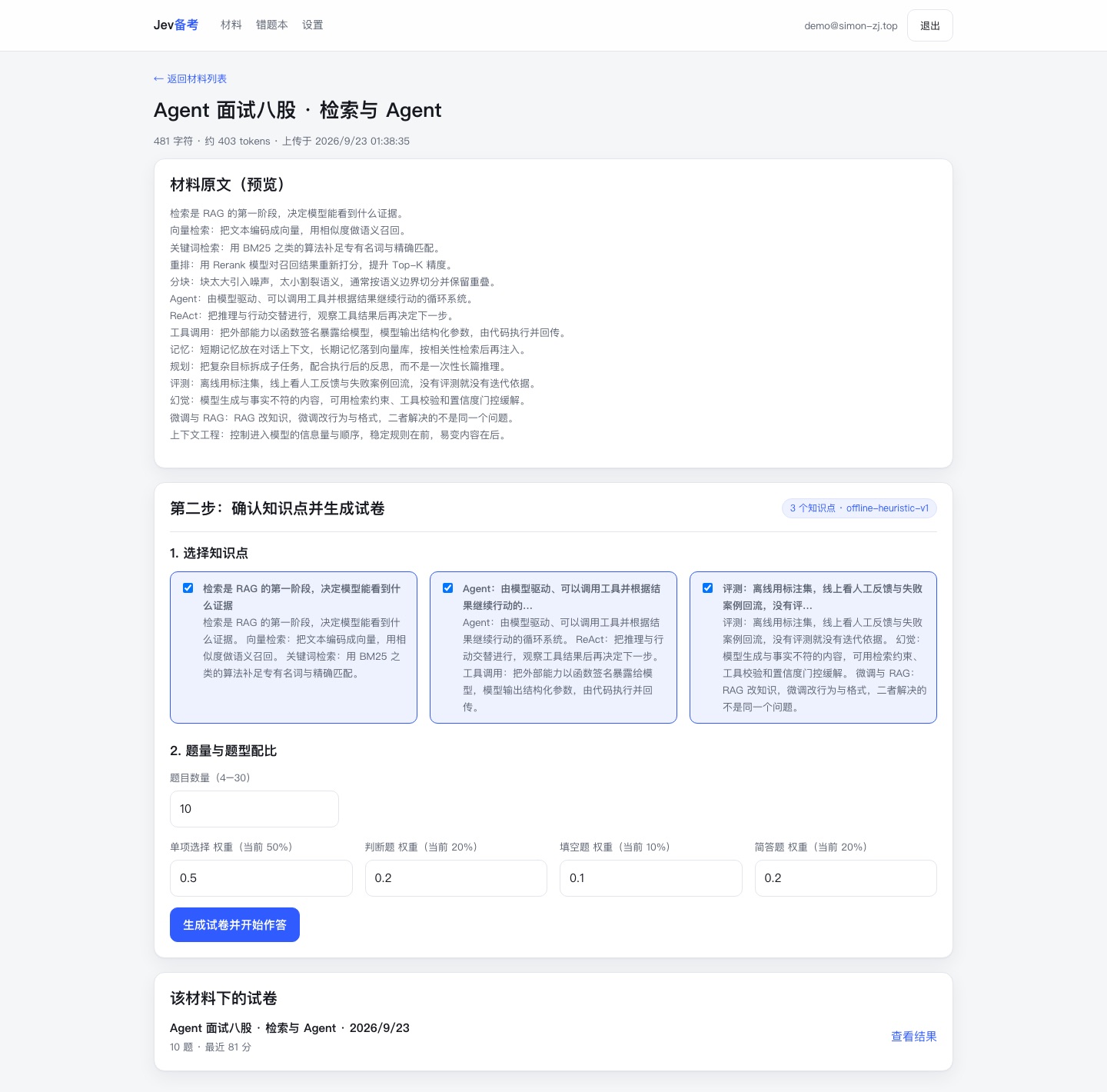
上传:Agent 面试八股(检索 / Agent / 评测)
Upload: agent interview notes (retrieval, agents, evals)
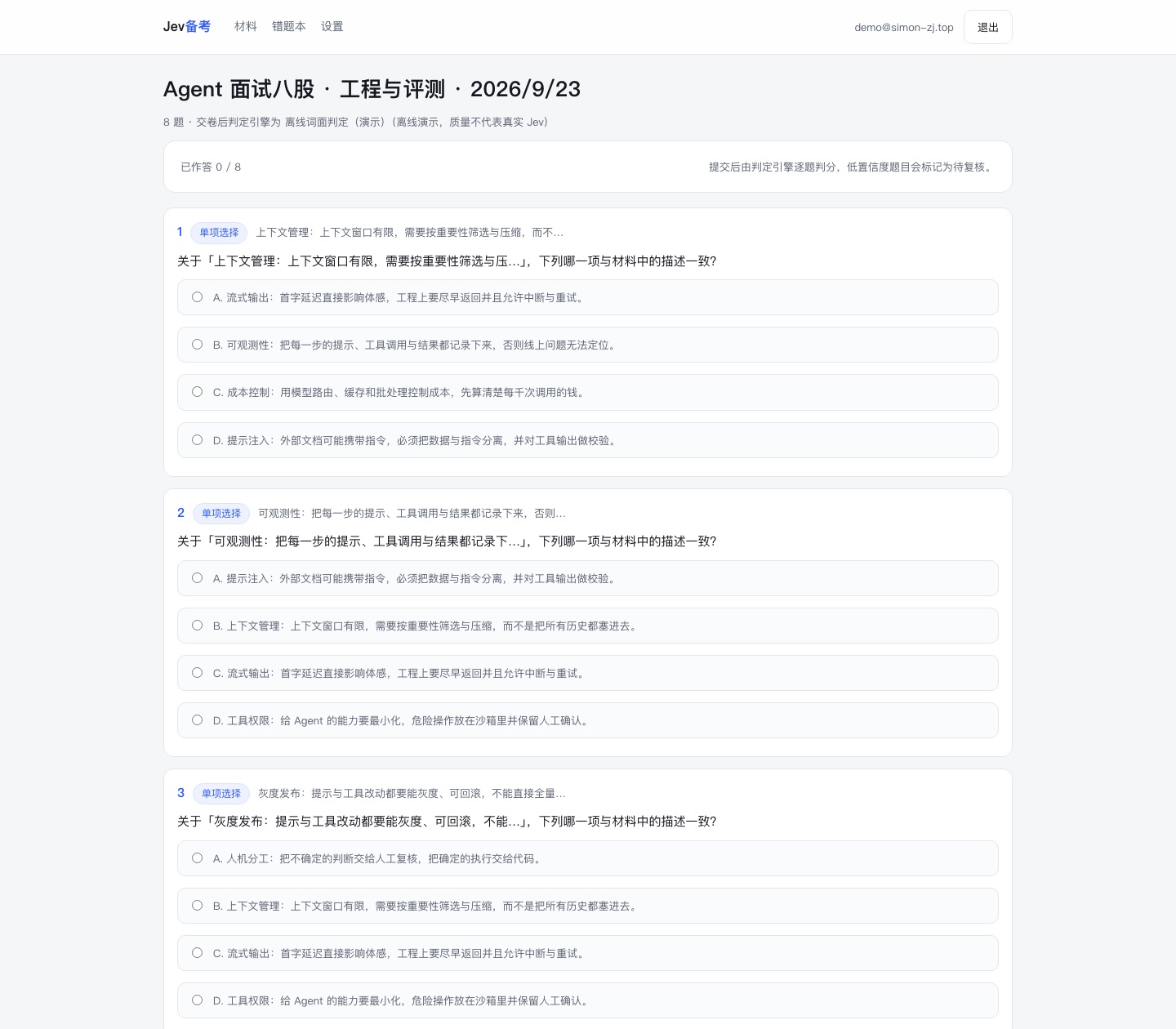
确认知识点 → 生成 10 题 → 作答 → 看逐点判定
Confirm topics, generate ten questions, answer, read the point-level report